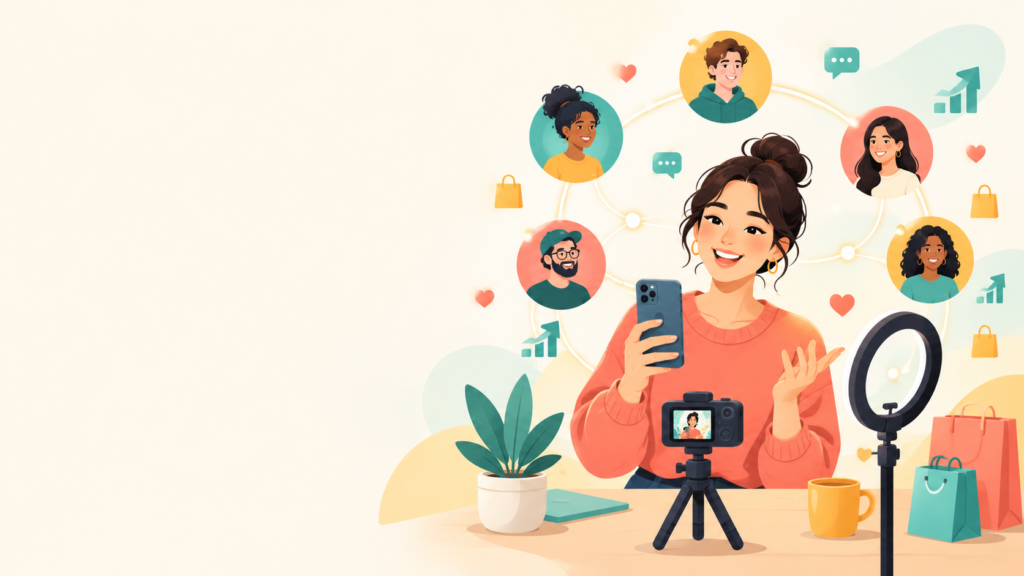
Let me tell you why the smartest brands are quietly skipping celebrity deals and working with creators who have just a few thousand followers.
Here’s something I keep noticing. Think about the last time you scrolled past a big celebrity’s paid post. Did you stop? Probably not. Now think about the last time a creator you actually follow said, “I’ve been using this for a month, and honestly, it’s great.” You probably paused, maybe even bought it. That small difference is the whole story of micro influencer marketing.
So, what exactly is a micro influencer?
It’s simply a creator with a smaller but really engaged audience, usually somewhere between 10,000 and 100,000 followers. You’ll also hear the term nano influencer, which means someone with roughly 1,000 to 10,000 followers, often just a regular person who’s passionate about one thing.
But the number isn’t what matters. What matters is the relationship. These creators reply to comments. They know their audience. They stick to a topic, like skincare for sensitive skin, budget travel, home coffee setups or plant-based meal prep. Their followers don’t see them as a billboard. They see them as a friend with good taste.
Why small creators often beat the big names
They get more real engagement
Here’s how it usually goes. The bigger an account gets, the smaller the share of followers who actually like, comment and share. Smaller communities are tighter and more active. Honestly, 8,000 people who care will often do more for you than 800,000 who scroll right past.
People trust them
When a micro influencer recommends something, it sounds like advice from a friend, not a script. And that trust is what turns a view into a click and a click into a sale.
You reach exactly the right people
If you sell protein powder, you don’t need everyone on the internet. You need people who already care about strength training. Micro influencers let you talk to that exact crowd, so you waste less money.
Your budget goes further
One mega-influencer post can cost tens of thousands. For the same money, you could work with a whole group of smaller creators, reach many different communities, and not put all your eggs in one basket. Plus, many of them are happy with free products, affiliate commissions or a modest fee.
You get content that feels real
This one is underrated. Micro influencers make photos, videos and reviews that look like real life, because they are real life. With permission, you can reuse that content in your ads, on your product pages and in your emails, where it often does better than slick studio creative.
How to actually run a campaign
Let me walk you through it, step by step.
First, know your goal. Do you want awareness, website visits, sales, app downloads? Decide that before you message anyone, because it changes who you pick.
Then, find the right creators. Don’t just look at follower counts. Ask yourself whether their audience looks like your customers, and whether the comments are real conversations. A great trick is to start with people who already mention or love your brand.
Check that they’re genuine. Scroll through their recent posts. Are they promoting ten brands a week? Are the comments just random emojis? A smaller, honest audience beats inflated numbers every time.
Make your outreach personal. Skip the copy-paste message. Mention a specific post you liked and say why your product fits their audience. Creators can tell instantly when you’ve done your homework.
Let them be creative. Give them your key message and any must-haves, then step back. They know what their community responds to far better than any brief does.
Think long-term. When a creator mentions your brand again and again over months, their audience starts to see it as a real favorite, not a one-time sponsorship.
How to tell if it’s working
Reach looks nice, but here’s what really counts:
- Engagement rate: how many people liked, commented, shared or saved
- Clicks: how many people actually visited your site
- Conversions: purchases or sign-ups, tracked with unique discount codes or links
- Cost per customer: what you spent to win each one
- Content value: how well the creator’s content performs when you reuse it
Start small. Test with five to ten creators, see who delivers, and put more into those. You’ll learn more from that than from one big-budget bet.
Mistakes I’d avoid
- Chasing followers instead of fit. The wrong audience won’t buy, no matter how big it is.
- Over-scripting. Forced lines kill the authenticity you’re paying for.
- Forgetting disclosure. Sponsored posts need a clear label, like #ad or the platform’s paid partnership tag.
- Skipping tracking. Without codes or links, you can’t tell what worked.
- Treating creators like vendors. Pay fairly, respect their time and communicate clearly.
The bottom line
Micro influencer marketing works because it’s human. Small creators have built real communities around real interests, and their word carries weight that normal ads struggle to match. For startups and small businesses especially, it’s a smarter way to grow: more trust, more relevance and more return on every rupee you spend.
So next time you plan a campaign, don’t ask who has the most followers. Ask who has the most influence over the people you want to reach. Often it’s someone you’ve never heard of, and that’s exactly the point.
Want to start this week? Pick one product, shortlist five relevant creators, send each a personal message, and see what happens. Small steps, big results.